Follow my blog with Bloglovin

2012-01-06

Pakayla Biehn


Pakayla Biehn is a painter that currently resides in our little town, San Francisco. With the growing popularity in digital photography and online communities, the ‘Double Exposure’ a classic technique in photography became the flavor of the year. In collaboration with these well known photographers, Pakayla paints these double exposure effect in a dream-like, photo-realistic way.

Pakayla Biehn - Double Exposure Series

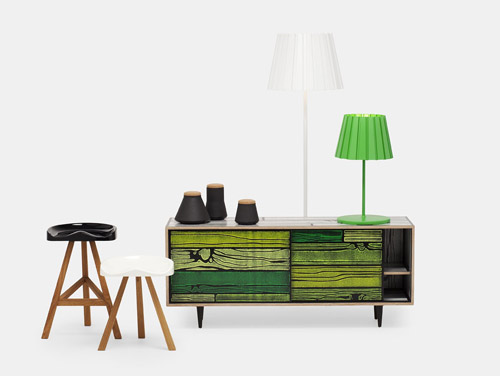
Richard Woods X Sebastian Wrong "Wrongwoods"


British artist Richard Woods is renowned for his work with garish and repetitious motifs.
These 'logos' are most often abstractions and interpretations of everyday patterns--the wood grain block print being his signature.
Designer Sebastian Wrong has teamed up with Woods to create this series where the prints have been applied to utilitarian cabinets reminiscent of the 1950s.

Richard Woods http://www.richardwoodsstudio.com/
Sebastian Wrong

2012-01-04

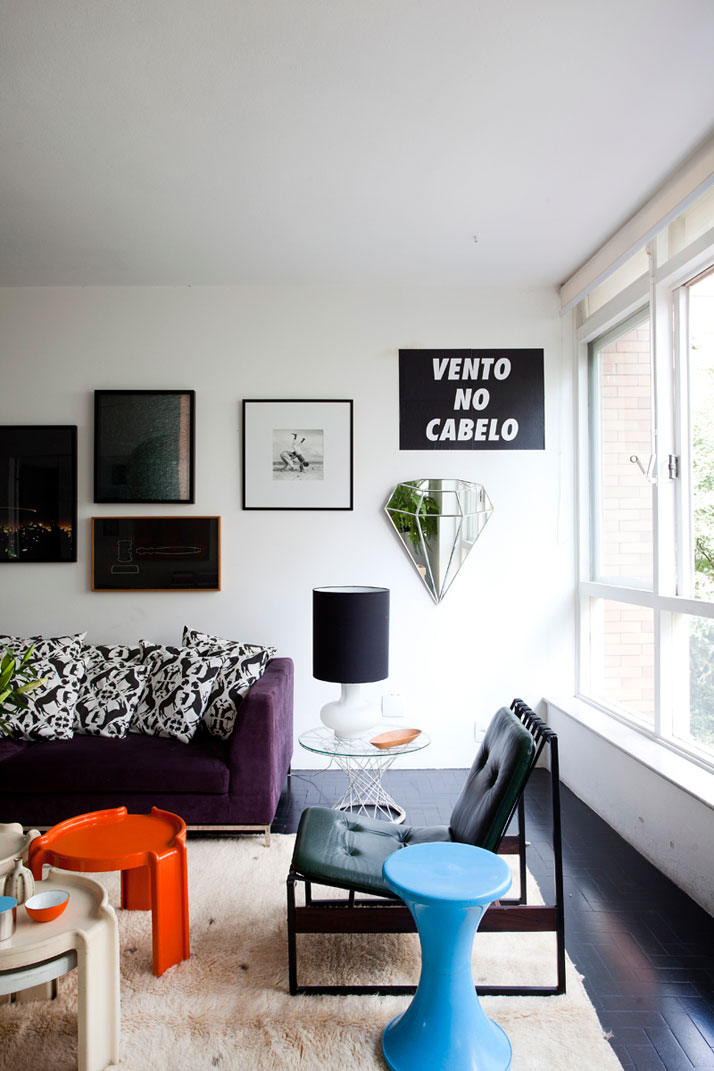
Mauricio Arruda Apartment


Mauricio Arruda Apartment // A Mid-Century Classic in São Paulo

Mauricio Arruda graduated at the Architecture and Urban Planning State University of Londrina, Paraná, Brazil (Universidade Estadual de Londrina/UEL) in 1997 and was granted a master degree at Sao Carlos State University in 2000. Mauricio has participated as a Latin America fellow-°©‐author at the creation of the Agenda 21 for Sustainable Construction in Developing Countries and has conducted several researches in the residential and environmental fields. Interior Design professor since 2001, has lectured in many Brazilian educational institutions, i.e. SENAC, Escola Panamericana de Arte. Currently teaching at the IED Brazilian branch – Instituto Europeo di Design. As a professional architect Arruda develops and manages projects for residential and commercial spaces as well as product design. Along with former university colleagues Guto Requena and Tatiana Sakurai Mauricio created the creative collective WHYDESIGN.

This article is reprinted from "Yatzer"

2012-01-03

Klaus Haapaniemi


Artist Klaus Haapaniemi and designer Mia Wallenius founded a design studio together in January 2010.
Their design approach is influenced by nature, Finnish folklore, fantasy and traditional decorative arts with a modern twist.
Focusing on Klaus Haapaniemi textile collection, they also work in furniture, fashion, books, events and exhibitions,
often collaborating with other designers and studios to create limited edition design pieces.

http://www.klaush.com/

2011-12-27

Yumurta (Semih Kaplanoglu, 2007)


イスラム世界では、かたちある総てのものを神の顕現と見る。喩えるならば一切の存在はビーズの首飾りであり、神はその糸である。糸が消えれば首飾りは散乱し、世界は原子の砂漠と化して小石ひとつ残らない。裏返せば、小石のような取るに足らない物でさえも神の恩寵、奇跡、神秘として捉えられる。

トルコの映画監督セミフ・カプランオールによる〈ユスフ三部作〉の第一作「卵 Yumurta)」を観ながらまず思い起こしたのは、このような世界観であった。物語を要約すると、イスタンブールで古書店を経営する中年男ユスフが母の訃報を受けて故郷に帰り、しばらくそこで過ごすという、それだけの話になってしまう。トルコに固有の風土や風習は興味深いが、そこにも焦点はない。宗教への視点も傍観的と言える。ただ心許なくも上記に挙げたイスラム的存在論の濃密な気配が、映画全体を覆っているように感じられた。

そのように感じた要因は、まず何よりも映像の中心から外れた部分に見られる細部の際立った美しさであり、その細部に観衆の注意を促すかのような、この映画に固有の話法(あるいは演出)にあるのではないかと思われる。状況説明的な描写や台詞はすべて省かれ、様々なことが不明のまま進行する物語に沿って現れる、ごく小さな辺縁の要素を拾い集めるうちに、男の素性や周囲との関係性が緩やかに判明していく。そしてしばしば現れる極端に長い(ほとんど静止画のような)映像に直面すると、知らぬ間に手掛かりを探す目で映像の細部をくまなく捜査している自分に気付かされるのである。しかしそこに手掛かりはない。むしろそれは物語に設けられたどこかへの窓であり扉なのだ。

〈ユスフ三部作〉は数を追って主人公の人生を遡る。第一作「卵」のユスフは壮年期、第二作「ミルク」は青年期、第三作「蜂蜜」は幼少期を扱っている。ところがそれぞれの背景となる時代は制作年とほぼ同一に設定されている。「卵」は2007年、「ミルク」は2008年であり、特に「蜂蜜」では冒頭の場面で幼いユスフに暦を読ませ、それが西暦2009年(ヒジュラ歴1430年か)であることを観衆に周知させている。こうして物語の中心人物であるユスフの人生は、時間がもたらす因果の檻から外れて宙を漂い始める。ユスフとは誰なのか、もはや誰にも判らない。さらに三部作全体を通して、既視感を覚えつつ相互に照応する要素を随所に発見する時、無言の啓示に満たされた世界の謎に接している感覚が募るのを意識せずにはいられなくなる。

2011-11-15

Uncle Boonmee Who Can Recall His Past Lives (Apichatpong Weerasethakul, 2010)

人間の目は緑色に対する感度が高いという。我々はやはり森の生き物だったのだろうか。多様な緑の陰影と濃淡の中で生まれ、獣を狩り草木の実を摘み拾って、食べては眠り、交わり別れながら、いつか死んで森に同化していく。緑の世界は我々のアルファでありオメガであるのかも知れない。つまりそこは我々の揺籃であり、墓であったのだ。生と死の対立は、また自他の相違でさえも、果てしなく続く緑の繊細な陰影に同化して輪郭を失っていくだろう。そのような世界から追放されて文明は築かれた。無数の塔に囲まれて洞窟は遠い。

2011-11-07

Acrophobia by Penguin Villa

Acrophobia by Penguin Villa from "Uncle boonmee who can recall his past lives"

2011-11-03

Mirror (Andrei Tarkovsky, 1974)

アンドレイ・タルコフスキーの『鏡』は、二十世紀後半に作られた最も美しい映画のひとつだ。突風になびく草原、燃え上がる納屋、部屋の中に降る雨、寝台の上に浮遊する身体、ブリューゲルの絵画を思わせる雪景色、様々なかたちでふとした瞬間に現れる不思議な鳥、朽ちた井戸、あらゆる水、火、風、緑、光、等々。ひとつひとつの映像が魔術的強度をもって観る者に迫る。

しかしそれだけではない。幻想を伴う追憶と進行しつつある現在との交錯、そこに挿入される歴史的記録映像との切り返しから、意識ある存在の時空連続体的本質が顕現するのを鑑賞者は見守ることになるだろう。
また母と妻、父と息子という、私的であると同時に普遍的であり、対立的であると同時に鏡像的でもある関係性が、まさに映画的な話法によって多重に織り合わされていくのを目の当たりにしながら、特定の地域や個人という枠が知らぬ間に解消されていることにも気付くだろう。

映画と列車は似ている。どちらにも時刻表がある。人々は同時に集まり、同時に別れる。四角く切り取られた景色が刻々と予定どおりに変わっていく。時には雨が降る。稀に事故も起こる。ふいに止まり、燃え上がる。この映画も例外ではない。しかしその線的な制約を超える道を選ぶ自由が作り手にはある。例えば吃ることを話法におけるひとつの可能性として示すこと。乱反射する物語。鏡。

ところで中世ロシアのイコン画家アンドレイ・リュブリョフと、イタリア・ルネサンスの万能人レオナルド・ダ・ヴィンチの違いは何か?リュブリョフは画僧であり、ダ・ヴィンチは技師にして職業画家であった。リュブリョフのイコンは聖像であり、ダ・ヴィンチの絵画は宗教的主題でさえも肖像的であった。リュブリョフは真理に仕え、ダ・ヴィンチは真実を探した。二人は異なる原理を生きたのだ。それを父と母の違いになぞらえることは誤りだろうか?その適否はともかく、二人の間に生まれた子供はどのように生きることを選ぶだろうか?父が姿を消した時代の中で。

映画の中で朗読されるアンドレイの父アルセー二・タルコフスキーの詩のひとつが、幸いにも英訳されていたのでここに添えておく。

1

I don't believe in omens or fear
Forebodings. I flee from neither slander
Nor from poison. Death does not exist.
Everyone's immortal. Everything is too.
No point in fearing death at seventeen,
Or seventy. There's only here and now, and light;
Neither death, nor darkness, exists.
We're all already on the seashore;
I'm one of those who'll be hauling in the nets
When a shoal of immortality swims by.

2

If you live in a house - the house will not fall.
I'll summon any of the centuries,
Then enter one and build a house in it.
That's why your children and your wives
Sit with me at one table, -
The same for ancestor and grandson:
The future is being accomplished now,
If I raise my hand a little,
All five beams of light will stay with you.
Each day I used my collar bones
For shoring up the past, as though with timber,
I measured time with geodetic chains
And marched across it, as though it were the Urals.

3

I tailored the age to fit me.
We walked to the south, raising dust above the steppe;
The tall weeds fumed; the grasshopper danced,
Touching its antenna to the horse-shoes - and it prophesied,
Threatening me with destruction, like a monk.
I strapped my fate to the saddle;
And even now, in these coming times,
I stand up in the stirrups like a child.

I'm satisfied with deathlessness,
For my blood to flow from age to age.
Yet for a corner whose warmth I could rely on
I'd willingly have given all my life,
Whenever her flying needle
Tugged me, like a thread, around the globe.

Life, Life by Arseny Tarkovsky